By: Shannon Flaherty
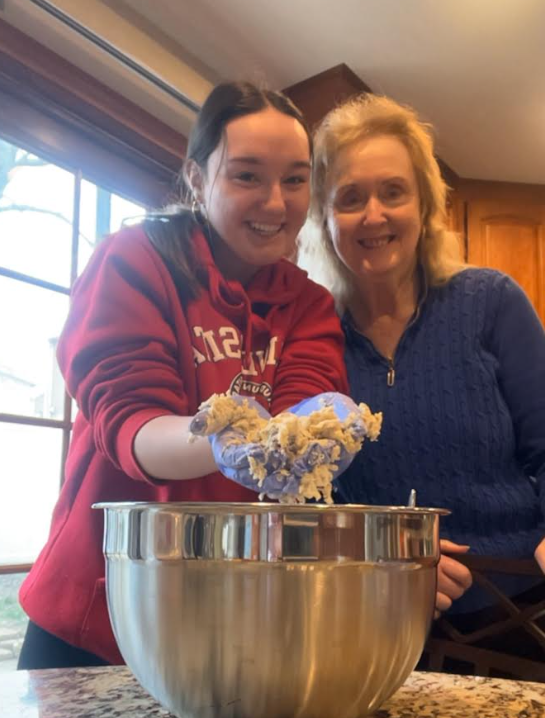
The grandfather clock in the kitchen keeps time like a metronome for the stereo that softly hums country music from down the hall. I let that rhythm guide the motion of my latex-glove covered hands as I slowly and gently push and fold the dough, over and over again. My grandmother and I are performing the dance of the knowledgeable and the eager all about the kitchen, falling back into patterns we did not remember having forged.
My grandmother and I spent our Saturday morning making Irish bread in the way that my great-grandmother had taught her many years ago. A simple Irish traditional recipe, which has been passed down through the women of my family. It used to make its appearance frequently at family gatherings, brunches after Sunday mass, and just because.
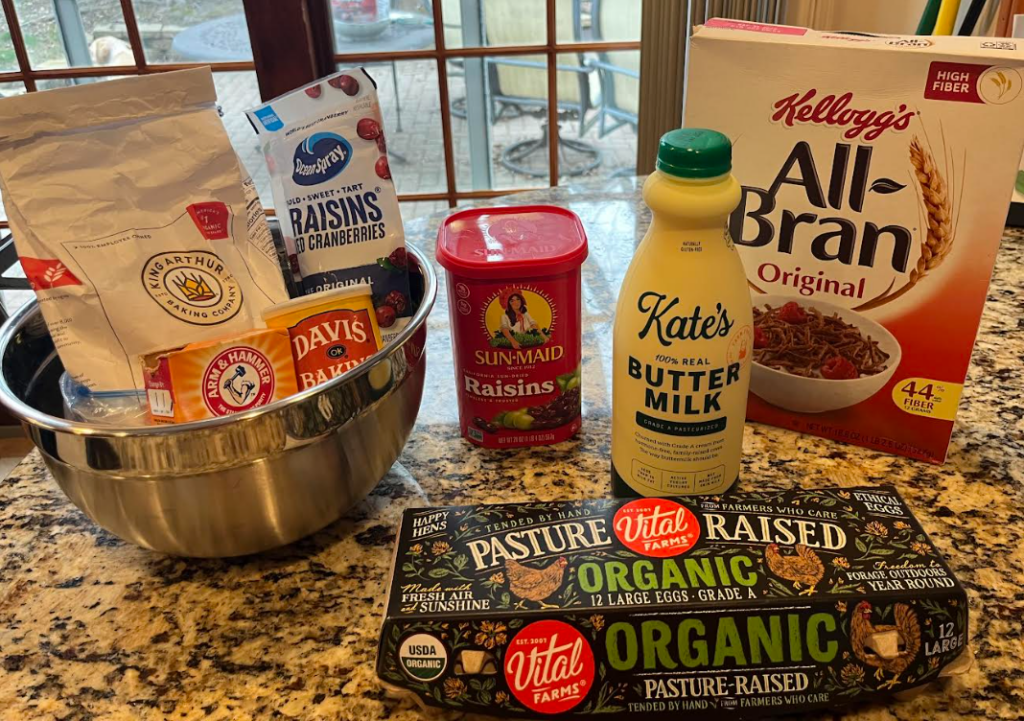
We set off to the local grocery store in the early morning, where my grandmother knew exactly where everything we needed was, from pasture-raised organic eggs to the good raisins. In her memoir Braiding Sweetgrass: Indigenous Wisdom, Scientific Knowledge, and the Teachings of Plants, Robin Wall Kimmerer discussed the teachings of the Original Instructions.She explains that these instructions are meant to align people, not to give them an exact map because “the work of living is creating that map for yourself” (Kimmerer 14). Similarly, the recipe for the Irish bread that my grandmother and I followed is not written in exact measurements and instructions, but rather simply engraved on her heart.
Each family member who has learned how to make this bread makes it uniquely, according to what feels right to them. I ditched my frivolous notetaking and attempted to feel the recipe on my heart, the same way that my grandmother does. I embraced her instructions such as “just add a handful of baking soda” and “that looks like about enough raisins”. The simple act of taking time and doing it together taught me much more than measuring cups.
We put everything together, mixing the dry ingredients first, then she slowly poured buttermilk into the solution as I kneaded it. We worked seamlessly together, dancing around as we worked in harmony to create. A chord, as simple and as real as the guitar chords I strummed for her on her guitar while waiting for the bread to bake, runs through and connects generations of my family members who have spent their time keeping traditions alive by preparing this bread together.
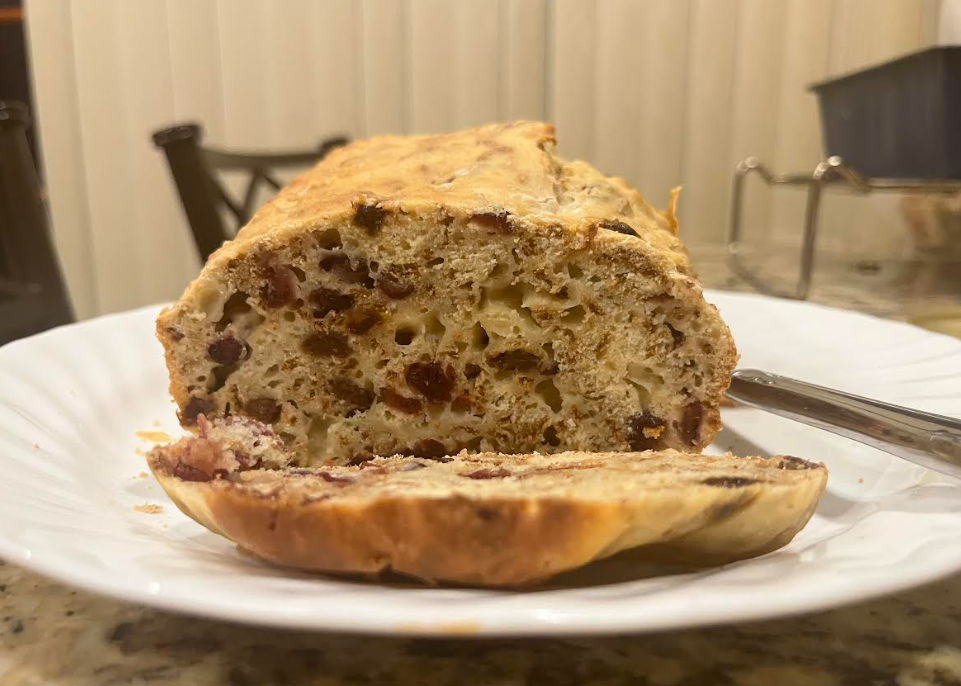
I was anxious to try the bread when it came out of the oven. Kimmerer’s words of advice rang once more in my head; “claim it, mistakes and all” (Kimmerer 104). No matter what, my creation is important, it is enough to have learned and to have tried, and most importantly to have done it all with my grandmother. The bread turned out amazing. We were overjoyed with the outcome, chatting away as we ate half the loaf in one sitting.
A slow Saturday working with my hands reminded me of the beauty of things that take time. Every second was worth it, and those hours spent with my grandmother are precious. I would knead forever if it meant I would be able to continue laughing with her and listening to more of her stories. With the second loaf tucked under my arm to share with my family and plans to make it with her again at Christmas, I thanked my grandmother for teaching me and making the bread with me. She smiled at me sweetly and said “no sweetheart, thank you for giving me the gift of time”.